Student Loan Debt and Bankruptcy: A Practical Resource
Student loan debt is one of the most persistent financial burdens facing people today.
Student loan debt can take decades to pay off. In addition to things like medical and credit card debt, it’s one of the primary reasons people experience financial hardship.
But student loan debt stands apart from these other debts for one significant reason: it’s far less likely to be discharged when you file for bankruptcy.
It’s important to understand, though, that this doesn’t mean that bankruptcy can’t help you if you’re struggling with student loan debt.
This page is designed to help you understand how student loan debt interacts with bankruptcy, what options may be available, and where people often misunderstand the process. It also serves as a central resource that connects to more detailed articles on specific student loan and bankruptcy topics.
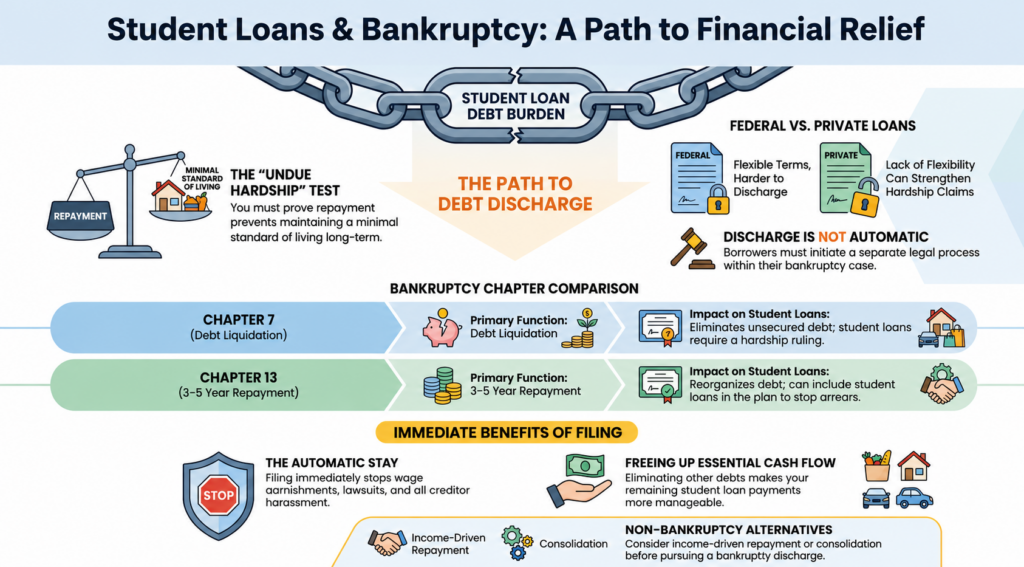
Student Loans & Bankruptcy: A Path to Financial Relief
Student loan debt generally falls into two main categories: federal student loans and private student loans. While both are used to finance your education, they are treated differently under the law.
Federal student loans are issued or backed by the U.S. Department of Education. These loans often come with repayment options that adjust based on income, as well as potential forgiveness programs.
Banks, credit unions, or private lenders issue private student loans. They typically have fewer repayment protections and may be more aggressive in collections.
Student loans also differ from other debts because they are not automatically discharged in bankruptcy. This distinction is the source of much confusion and frustration for borrowers.
A Brief Overview of Bankruptcy
Bankruptcy is a legal process designed to help you eliminate or reorganize debt when repayment becomes a burden. Two of the most common bankruptcy options for people dealing with student loan debt include:
Chapter 7 Bankruptcy
Chapter 7 is often referred to as liquidation bankruptcy. It can eliminate many unsecured debts, such as credit cards and medical bills, relatively quickly. However, student loans are not automatically wiped out in Chapter 7.
Chapter 13 Bankruptcy
Chapter 13 involves a court-approved repayment plan that lasts three to five years. It can help manage debt, stop collection actions, and provide structure, but student loans usually survive the process.
Keep in mind, either chapter may not erase student loans outright, but they can play an important role in financial recovery.
Can Student Loans Be Discharged in Bankruptcy?
The short answer is yes. However, this only occurs under specific circumstances.
If you want bankruptcy to discharge your student loan debt, you must prove that repayment would cause an undue hardship. This is a separate legal process within your bankruptcy case. It requires evidence, testimony, and legal arguments, so if you’re attempting this, make sure you have the guidance of a bankruptcy attorney with experience dealing with student loan debt.
Courts apply strict standards when evaluating these cases, which is why student loan discharges are relatively rare. However, they do happen, particularly when borrowers can show long-term financial distress and good-faith efforts to repay.
What Does “Undue Hardship” Mean?
Undue hardship does not have a single, simple definition. Courts look at several factors, including:
Whether your current income can cover basic living expenses while repaying the loans
Whether your financial situation is likely to improve in the future
Whether you have made reasonable efforts to repay your student loans
Judges are not looking for temporary setbacks. They focus on whether repayment would prevent you from maintaining a minimal standard of living over the long term.
Federal vs. Private Student Loans in Bankruptcy
The type of student loan you have matters.
Federal loans often come with income-driven repayment plans and forgiveness programs. Courts usually require you to explore these alternatives before seeking discharge.
People who used private loans for college often find the loans less flexible than federal loans. But when it comes to bankruptcy, this can be good news. These less flexible terms tend to strengthen your undue hardship argument.
Each case depends on the loan terms and the borrower’s financial reality.
Alternatives to Bankruptcy for Student Loan Relief
Because student loan discharge is difficult, many borrowers benefit from exploring non-bankruptcy options first. These may include:
Income-driven repayment plans
Loan consolidation
Deferment or forbearance
Loan forgiveness programs for qualifying borrowers
How Bankruptcy Can Still Help With Student Loans
Did someone tell you that bankruptcy is unlikely to discharge your student loan debt?
Before you dismiss it as an option, know that bankruptcy could still offer meaningful relief.
When you eliminate or reduce other debts, bankruptcy may free up income that you can put toward what you owe on your student loans.
Bankruptcy also stops legal actions, including wage garnishments, collection lawsuits, and creditor harassment through the automatic stay. This gives you breathing room to figure out your financial situation.
In Chapter 13 cases, student loans may be included in the repayment plan, allowing borrowers to stay current or reduce arrears while protecting their overall financial stability.
Common Misconceptions About Student Loans and Bankruptcy
Many borrowers avoid exploring bankruptcy because of misinformation. Common myths include:
Student loans can never be discharged
Bankruptcy permanently destroys your credit
You must be entirely unemployed to qualify
Waiting longer will improve your chances
Understanding the reality can help you make informed decisions instead of relying on fear or assumptions.
Frequently Asked Questions
Can you discharge private student loans in bankruptcy?
In some cases, yes. Private loans may be eligible for discharge if undue hardship can be proven.
Does bankruptcy stop student loan wage garnishment?
Yes. The automatic stay stops most collection actions, including garnishment.
Do I need an attorney to pursue student loan discharge?
You aren’t required to hire an attorney to help you with student loan debt discharge or bankruptcy in general. However, not doing so puts you at risk. This is especially true when you’re dealing with student loan debt because discharge is rare.
Related Student Loan and Bankruptcy Resources
We offer a variety of detailed resources to help you with the management of your student loans and other debts:
Student loan discharge and undue hardship standards (link to: https://www.bankruptcygroup.net/blog/can-studen-loans-be-discharged-in-bankruptcy/)
Why I Still Owe Old Student Loans I Thought Were Paid Off (link to: https://www.bankruptcygroup.net/blog/why-do-some-i-still-owe-old-student-loans-i-thought-were-paid-off/)
Tips for Managing Student Loan Debt (link to: https://chatgpt.com/c/6980e1ef-71b8-8330-b00b-41f65bedd90a)
These articles dive deeper into specific questions borrowers frequently ask.
How Legal Guidance Can Help
Student loan debt and bankruptcy guidelines continue to evolve. An experienced bankruptcy attorney can review your financial situation, explain your options, and help you decide whether bankruptcy, repayment programs, or a combination of strategies makes the most sense.
If you are struggling with student loan debt and considering bankruptcy, speaking with a legal professional can provide clarity and direction.
Contact BankruptcyGroup.net to explore your options and take the next step toward financial stability.
Georgia Bankruptcy Law Firm, LLC is considered a debt relief agency by federal law. The firm helps people file for bankruptcy relief under the Bankruptcy Code.
Contact Us
Brunswick, Georgia
2225 Gloucester St.
Brunswick, GA 31520
Tel: (912) 554-3774 | Fax: (912) 262-0285